2024 Ontario Building Code: Essential Standards for Jointing and Plumbing Materials
Sarah's Expert Insight
OBC Compliance Specialist
"At empcontracting.ca Inc., we emphasize that the strict lead-content limits and corrosion-resistance requirements in the 2024 OBC are vital for the hard water conditions often found in London and the high-moisture cottage environments of Muskoka. Ensuring that only non-ferrous cleanout plugs and high-grade floor flanges are used prevents costly subfloor damage and ensures long-term health safety for potable water systems in both Oakville and Southwestern Ontario."
At empcontracting.ca Inc. your construction contractor in London, Ontario, we prioritize strict adherence to the latest provincial regulations. Understanding the specifications for jointing and miscellaneous plumbing materials is vital for ensuring the safety and longevity of your building's infrastructure.
7.2.9. Jointing Materials and Standards
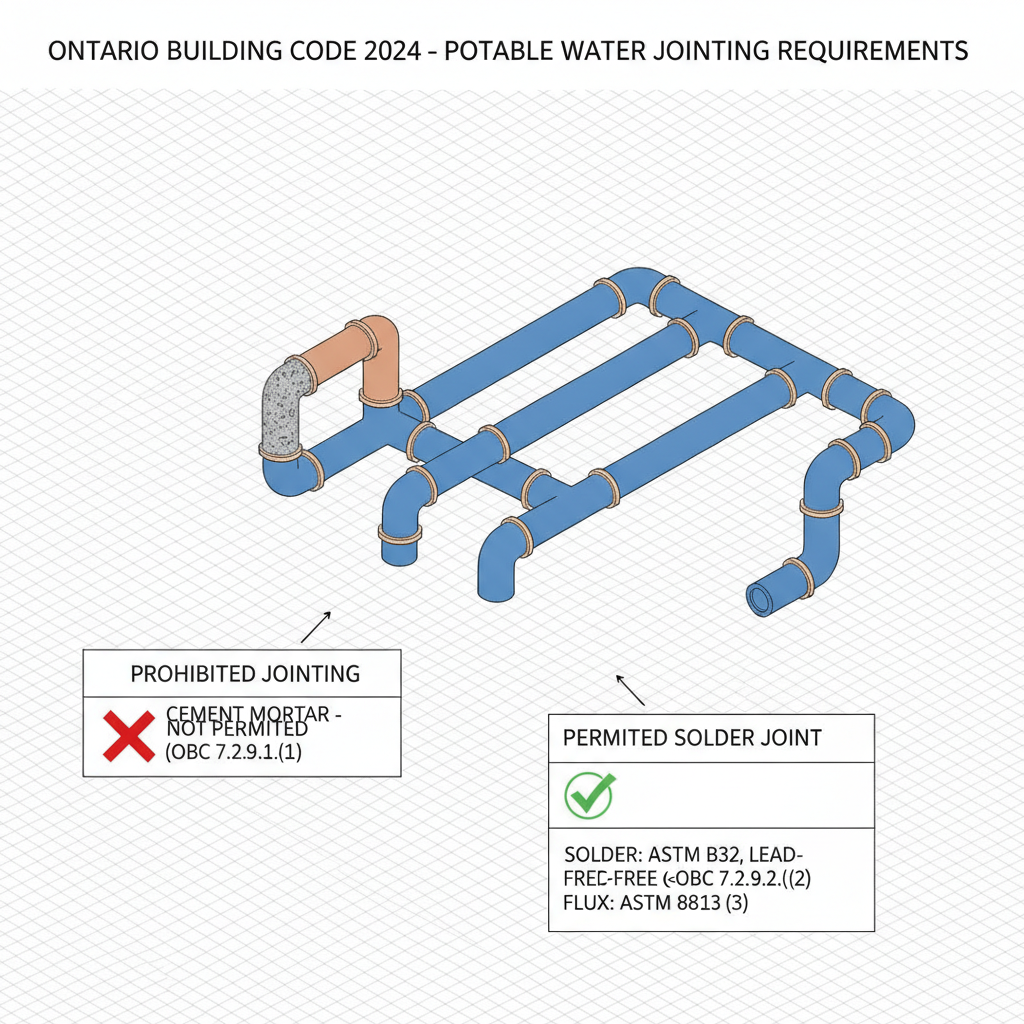
7.2.9.1. Cement Mortar Prohibition
According to the OBC, cement mortar is strictly prohibited for use in jointing applications to ensure the flexibility and seal integrity of plumbing connections.
7.2.9.2. Solder and Fluxes for Potable Water
For systems carrying drinking water, solders must conform to ASTM B32 standards. Crucially, any solders or fluxes containing more than 0.2% lead are prohibited. All fluxes must comply with ASTM B813, and brazing alloys must meet ANSI/AWS A5.8M/A5.8 (BCuP range) to maintain high-pressure safety.
7.2.10. Miscellaneous Materials and Fasteners
7.2.10.1. Standards for Floor Flanges
Floor flanges must meet material-specific CSA standards to prevent leaks and structural damage:
- Brass: Must conform to CSA B158.1.
- ABS: Must conform to CSA B181.1.
- PVC: Must conform to CSA B181.2.
- Cast iron, copper, and aluminum flanges must be verified as suitable for their specific purpose.
7.2.10.2. Corrosion-Resistant Fasteners
To prevent degradation in high-moisture environments, every screw, bolt, nut, and washer used to anchor water closets, floor flanges, or cleanout covers must be made of corrosion-resistant materials.
7.2.10.3. Cleanout Fitting Requirements
Plugs or caps intended for removal from ferrous fittings must be made of non-ferrous materials. Furthermore, any cleanout fitting that cannot maintain a gas-tight seal after standard maintenance or removal is prohibited from installation.
Disclaimer: This content is generated from the Ontario Building Code for educational purposes. Always consult with a licensed professional engineer or your local building department before starting any construction project in London, Ontario.