2024 Ontario Building Code Guide: Drainage Connections and Fixture Location Standards
Sarah's Expert Insight
OBC Compliance Specialist
"Proper execution of air breaks and backwater valve placement is vital for protecting residential and commercial properties in London and Oakville from storm-related backups. As your construction contractor in London, Ontario, empcontracting.ca Inc. meticulously applies these 2024 drainage standards to ensure your food-service or multi-storey project remains compliant and moisture-free."
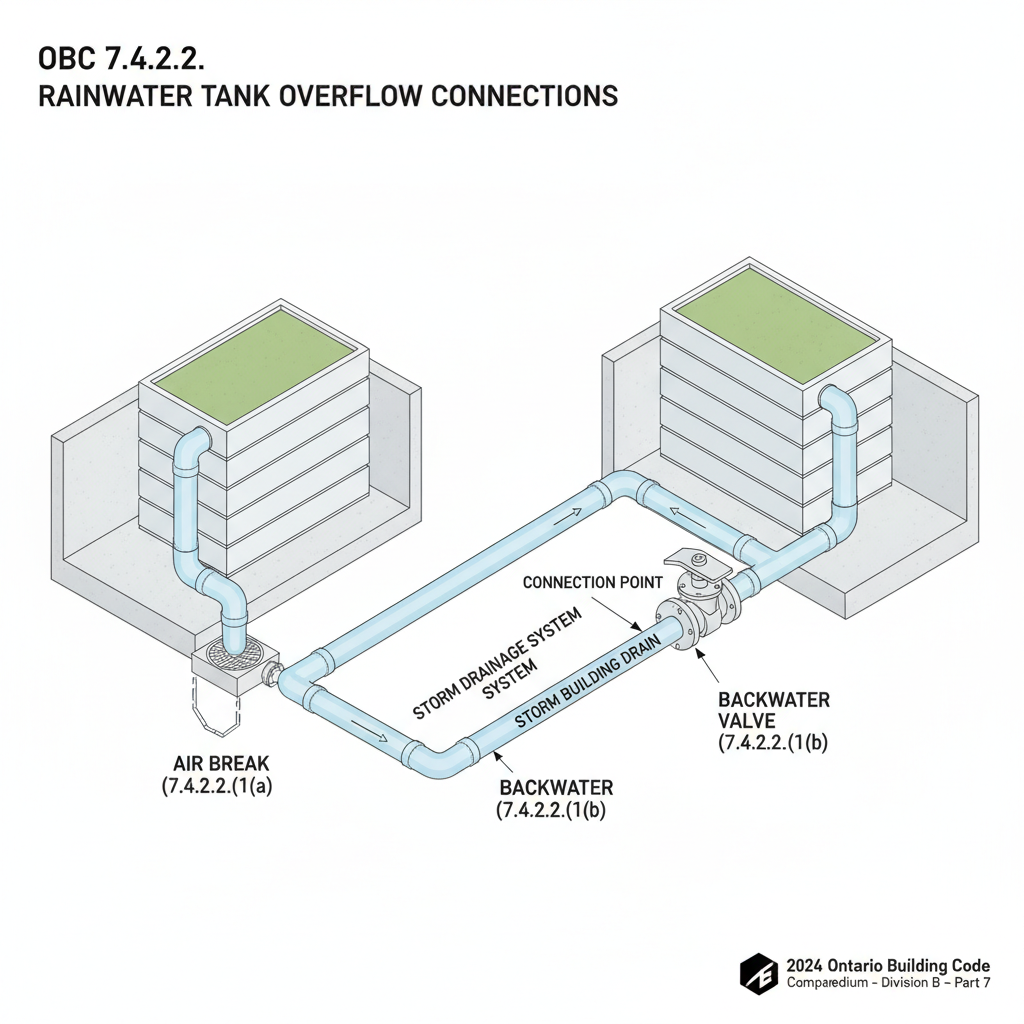
Section 7.4.2.2: Connecting Rainwater Tank Overflows
In the 2024 Building Code Compendium, managing rainwater tank overflows is critical for storm drainage integrity. When connecting these tanks to a storm drainage system, the OBC requires the use of an air break or a backwater valve installed on the storm pipe before the main building drain connection. This ensures protection against backflow and cross-contamination.
Section 7.4.2.3: Direct Connections and Waste Pipe Requirements
Fixture Outlet and Sanitary Drainage
Specific fixtures may be directly connected to branches provided they meet nominal pipe size (NPS) requirements of at least 1¼ inches and terminate above the flood level rim to form a functional air break. For projects involving food or drink storage and preparation, every waste pipe must be trapped and maintain a diameter equal to the drain outlet.
When working with complex plumbing layouts, partnering with empcontracting.ca Inc. your construction contractor in London, Ontario ensures that all waste pipes for food processing and multi-storey connections are compliant with the latest OBC standards.
Section 7.4.3: Location and Equipment Restrictions
Plumbing Fixture Placement
The code is strict regarding the environment surrounding sanitary units. Bathtubs, showers, and sanitary units must not be installed adjacent to wall or floor surfaces that are pervious to water, preventing moisture damage and mold growth within the building envelope.
Restricted Areas for Traps and Interceptors
Indirect connections and traps are prohibited in crawl spaces or unfrequented areas to ensure they can be monitored and maintained. Additionally, the OBC mandates specific sequences for grease interceptors; equipment discharging organic solids must utilize a food scrap interceptor upstream to prevent system failure.
Disclaimer: This content is generated from the Ontario Building Code for educational purposes. Always consult with a licensed professional engineer or your local building department before starting any construction project in London, Ontario.