Mastering OBC 2024 Section 7.4.10: Hydraulic Load Standards for Ontario Construction
Sarah's Expert Insight
OBC Compliance Specialist
"In regions like London and Oakville, where urban density is increasing, or in Muskoka where heavy rainfall is common, precise hydraulic load calculations are the difference between a dry basement and a structural disaster. As empcontracting.ca Inc. your construction contractor in London, Ontario, we prioritize the SB-1 climatic data to ensure that our drainage and roofing systems exceed OBC requirements for long-term project resilience."
Navigating the 2024 Ontario Building Code (OBC) is essential for any successful building project. Section 7.4.10 outlines the critical requirements for calculating hydraulic loads, ensuring that drainage systems in London and across Ontario are both safe and efficient. At empcontracting.ca Inc. your construction contractor in London, Ontario, we specialize in applying these complex standards to real-world developments.
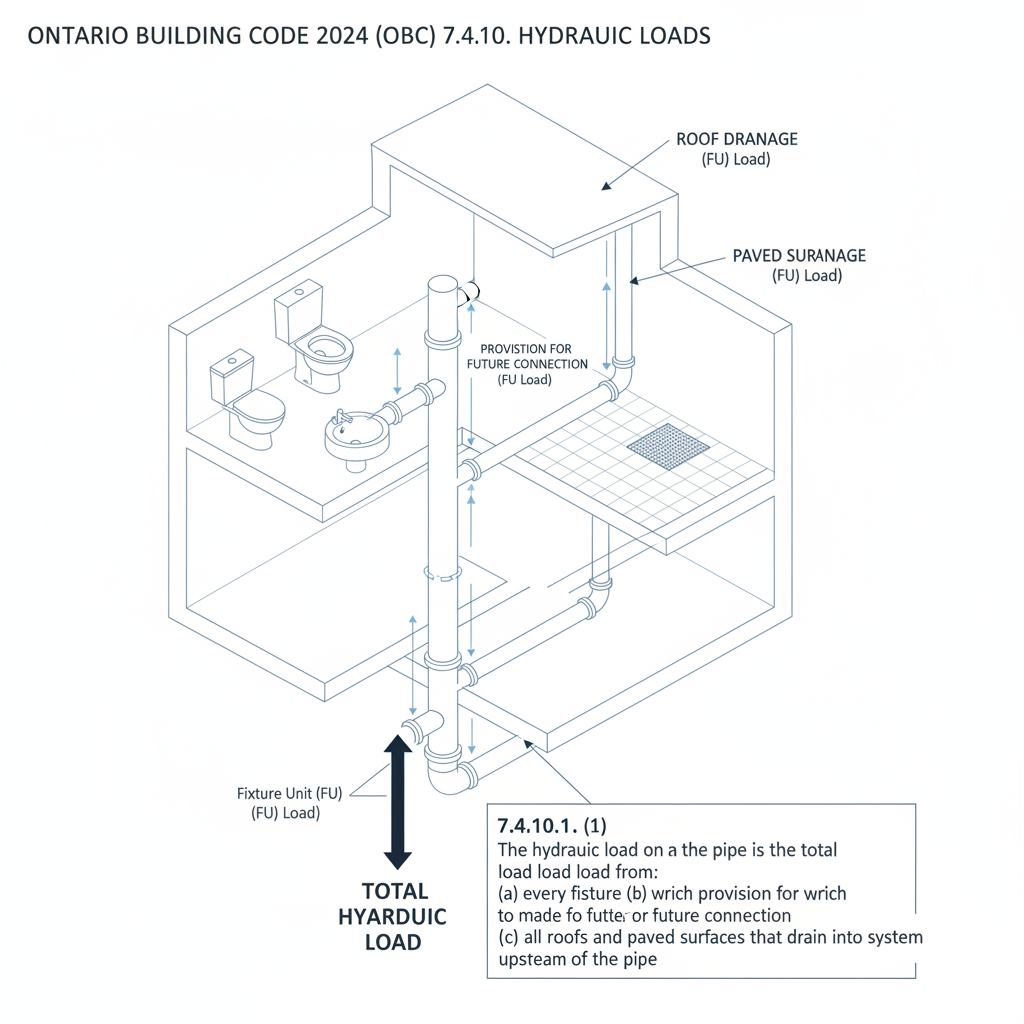
7.4.10.1. Determining Total Hydraulic Load
The total hydraulic load on a pipe is not just about current usage; it is a cumulative calculation that includes:
- Every fixture currently connected upstream.
- Provisions for future fixture connections.
- Runoff from roofs and paved surfaces draining into the system.
7.4.10.2. Fixture Units and Trap Sizes
The OBC standardizes hydraulic loads based on fixture units. If a fixture isn't specifically listed in Table 7.4.9.3, the load is determined by the nominal pipe size of the trap. For example, a 1.5-inch trap carries 2 fixture units, while a 4-inch trap carries 6. Proper sizing prevents siphoning and drainage failures.
7.4.10.3. Continuous and Semi-Continuous Flow
For mechanical systems like pumps or air-conditioning units, the code requires a conversion of 31.7 fixture units for every litre per second of flow. However, when these systems drain into combined or storm sewers, the load is calculated at 900 L per litre per second to account for peak storm events.
7.4.10.4. Managing Stormwater from Roofs and Paved Surfaces
Calculating the hydraulic load from vertical and horizontal surfaces is vital for Ontario's climate. The load is determined using the maximum 15-minute rainfall data from MMAH Supplementary Standard SB-1, multiplied by the horizontal area plus 50% of the largest adjoining vertical surface.
Flow Control and Structural Safety
While flow control roof drains are permitted to manage runoff, the OBC stipulates that the roof structure must be engineered to support the temporary weight of stored water, and the drain-down time must never exceed 24 hours.
Disclaimer: This content is generated from the Ontario Building Code for educational purposes. Always consult with a licensed professional engineer or your local building department before starting any construction project in London, Ontario.