OBC Backflow Prevention Guide: Ontario Building Code Section 7.6.2 for Fire, Solar, and Premise Isolation
Sarah's Expert Insight
OBC Compliance Specialist
"As a senior consultant at empcontracting.ca Inc. your construction contractor in London, Ontario, I've seen how critical proper backflow prevention is for passing inspections in high-growth areas like Oakville and Muskoka. Whether it is a luxury solar-heated cottage or a commercial fire system, choosing the correct CSA-certified valve is the only way to ensure long-term potable water safety and code compliance."
Understanding the complexities of the 2024 Building Code Compendium is essential for any modern build. At empcontracting.ca Inc. your construction contractor in London, Ontario, we ensure every project adheres to these rigorous safety standards to protect the integrity of your potable water system.
Fire Sprinkler and Standpipe System Protection
Class 6 System Requirements
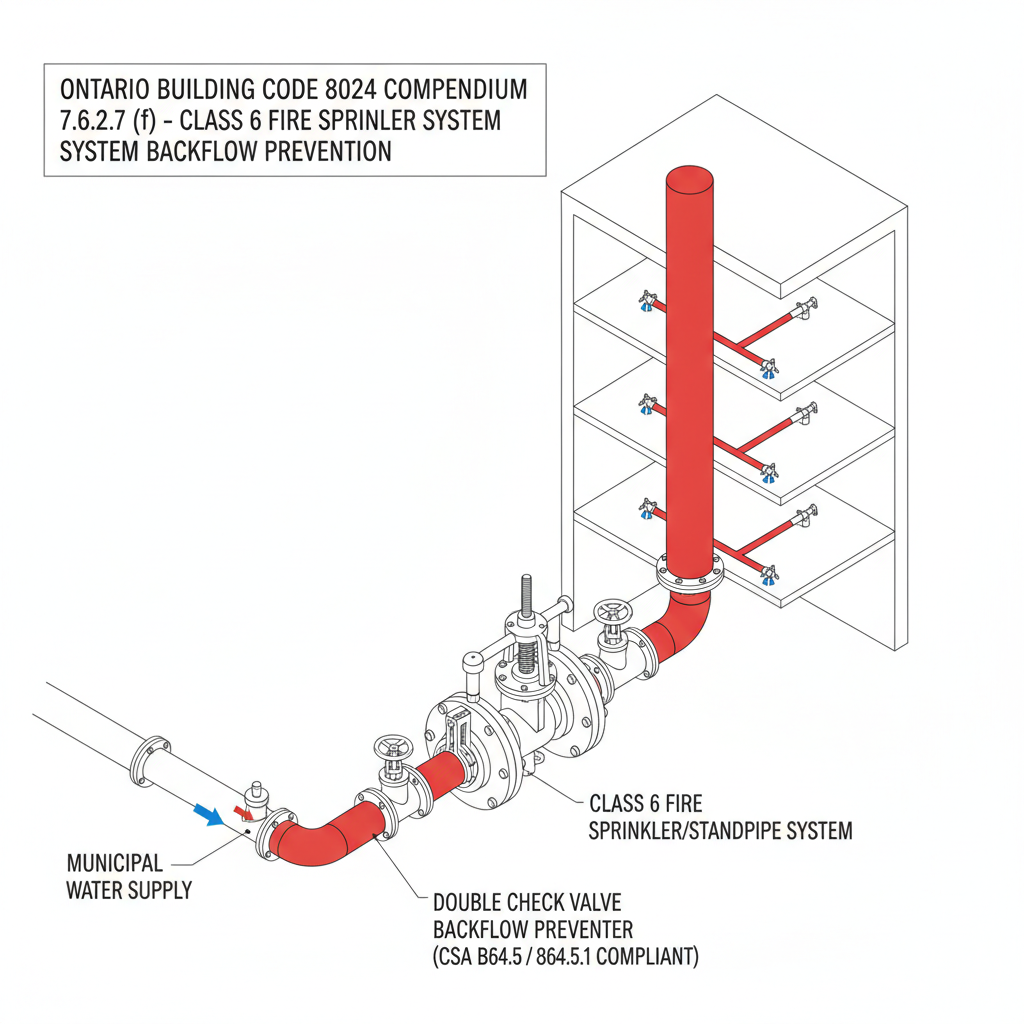
Under Section 7.6.2.7, Class 6 fire sprinkler and standpipe systems must be protected by a double check valve backflow preventer (DCVA) conforming to CSA B64.5 or CSA B64.5.1. These must be installed upstream of any fire department pumper connection.
High-Hazard Fire Service Connections
In cases where a potentially severe health hazard exists, the code requires a reduced pressure principle (RP) backflow preventer. Specifically, when an RP preventer is required on a water service pipe, a corresponding unit conforming to CSA B64.4.1 must also be installed on the fire service connection.
Solar Domestic Hot Water Systems (7.6.2.5A)
Heat Transfer Loop Safety
Except for direct flow-through systems, potable water systems must be shielded from backflow where solar heat transfer loops are present. For residential occupancies under Part 9, backflow preventers must be selected in accordance with CAN/CSA-F379.1 standards. Systems using relatively harmless heat transfer fluids may utilize a dual check valve backflow preventer (DCAP) conforming to CSA B64.3.
Premise Isolation and Hazard Management (7.6.2.6)
Facility Isolation Requirements
Buildings classified with moderate or severe hazards must implement premise isolation of the potable water system. While residential Part 9 buildings are generally exempt, isolation is mandatory if the property has access to an auxiliary water supply to prevent cross-contamination.
Hose Bibb Compliance (7.6.2.7)
The OBC is clear regarding external water access: any hose bibb installed outside a building, within a garage, or in any area with an identifiable contamination risk must be equipped with backflow protection to secure the potable water supply.
Disclaimer: This content is generated from the Ontario Building Code for educational purposes. Always consult with a licensed professional engineer or your local building department before starting any construction project in London, Ontario.