2024 Ontario Building Code: Understanding Water Distribution Sizing and Table 7.6.3.2.-A
Sarah's Expert Insight
OBC Compliance Specialist
"In high-growth areas like London and Oakville, or luxury builds in Muskoka, precise hydraulic load calculation is the difference between a high-performance home and a project plagued by pressure drops. At empcontracting.ca Inc., we meticulously apply Table 7.6.3.2.-A to ensure that even during peak usage—such as multiple showers and appliances running simultaneously—the water distribution remains consistent and code-compliant. This technical accuracy is essential for passing inspections and delivering a premium end-user experience."
When planning a residential or commercial build, understanding the 2024 Building Code Compendium is essential for ensuring a reliable plumbing infrastructure. Section 7.6.3.2. outlines the specific requirements for sizing water distribution systems based on hydraulic loads and fixture units.
Understanding Table 7.6.3.2.-A: Hydraulic Loads and Pipe Sizes
Table 7.6.3.2.-A is the primary reference for determining the minimum nominal pipe size (NPS) and hydraulic load (measured in fixture units) for various fixtures. Whether you are installing a standard bathroom group or a high-capacity commercial dishwasher, these values ensure that your system can handle the demand without loss of pressure.
Private vs. Public Use Hydraulic Loads
The code distinguishes between private use (residential) and public use (commercial/institutional). For example, a standard bathtub with a 1/2-inch spout carries a total hydraulic load of 1.4 fixture units in a private setting, whereas the same fixture in a public setting is rated at 4 fixture units. Accurate calculations are vital to prevent system failure, and empcontracting.ca Inc. your construction contractor in London, Ontario, specializes in these precise interpretations.
Key Fixture Requirements
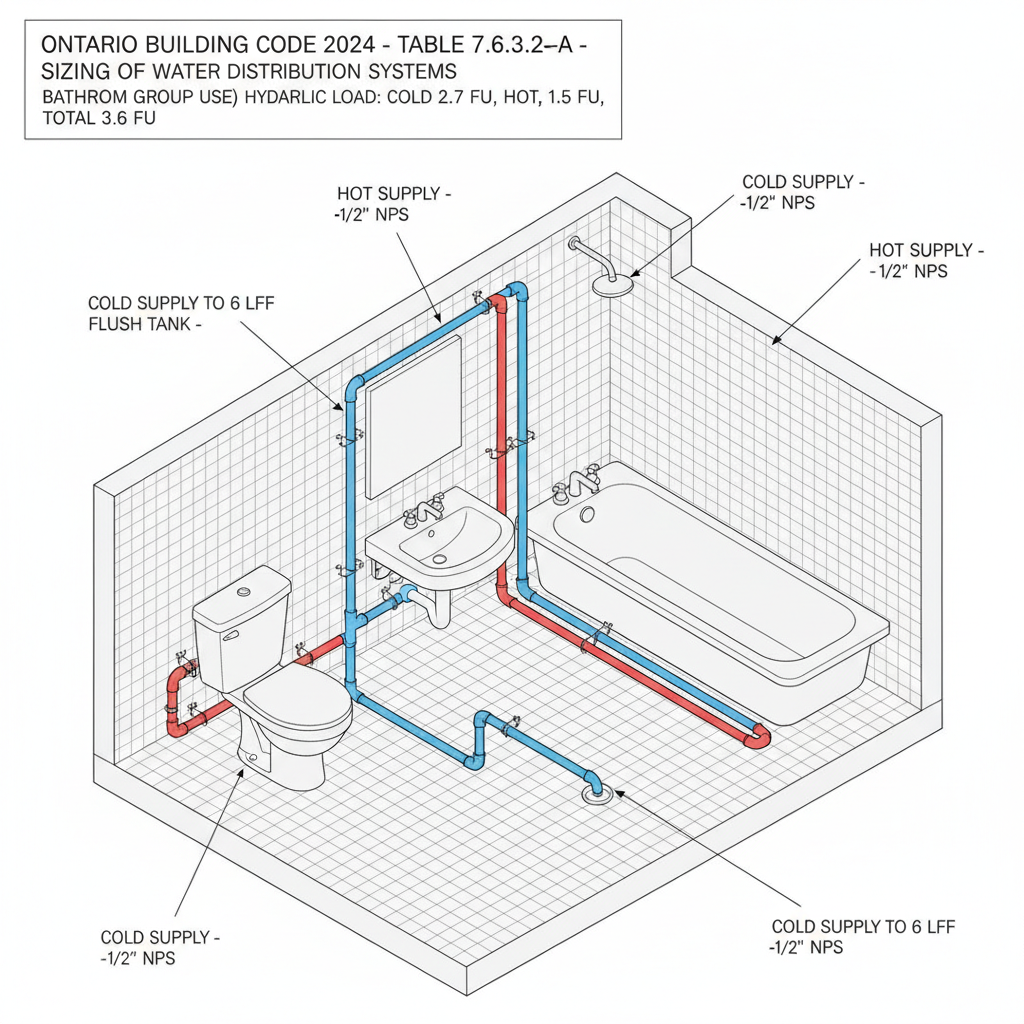
- Bathroom Groups: A private bathroom group with a 6 LPF flush tank is rated at 3.6 total fixture units.
- Kitchen Sinks: Domestic kitchen sinks (8.3 LPM or less) require a 3/8-inch supply pipe and carry 1.4 fixture units.
- Hose Bibbs: A standard 3/4-inch hose bibb requires a 3.0 hydraulic load for private use, significantly increasing to 6.0 for public applications.
Professional Implementation for Ontario Construction
Adhering to these sizing standards is not just about compliance; it is about the longevity of the structure. Incorrect pipe sizing can lead to noise issues, insufficient flow, and premature wear on the plumbing system. If you are developing a property in Southwestern Ontario, partnering with an expert ensures these technical details are handled during the design phase.
Disclaimer: This content is generated from the Ontario Building Code for educational purposes. Always consult with a licensed professional engineer or your local building department before starting any construction project in London, Ontario.