Understanding OBC Class 2 Sewage Systems for Greywater Disposal in Ontario
Sarah's Expert Insight
OBC Compliance Specialist
"In areas like Muskoka and the rural outskirts of London, Class 2 systems are often the most efficient choice for accessory buildings or remote cabins. At empcontracting.ca Inc., we prioritize the 900mm groundwater separation and precise percolation testing to ensure these systems function effectively in Ontario's varied soil conditions without risking environmental fines or system failure."
When planning specialized drainage solutions, empcontracting.ca Inc. your construction contractor in London, Ontario, ensures your project meets all Part 8 requirements of the Ontario Building Code (OBC). Section 8.4 specifically governs Class 2 sewage systems, which are essential for managing greywater in specific residential and seasonal applications.
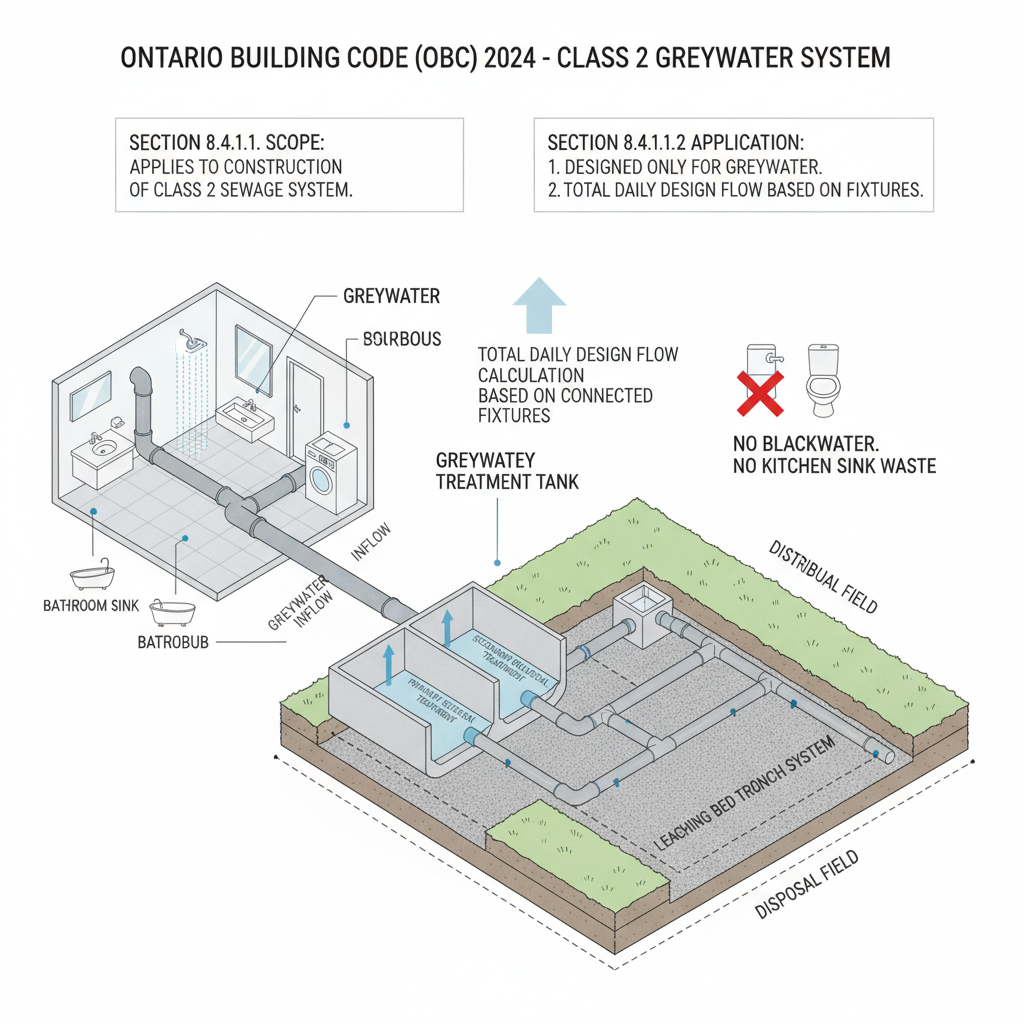
Section 8.4.1: Scope and Application of Greywater Systems
A Class 2 sewage system is strictly designed for the treatment and disposal of greywater. It is not intended for sanitary sewage containing human waste. The OBC mandates specific flow calculations to ensure the system is not overwhelmed:
Daily Design Flow Standards
- Pressurized Water Supply: 200 L per fixture unit.
- Non-Pressurized Water Supply: 125 L per fixture unit.
- Maximum Capacity: A Class 2 system cannot be used if the total daily greywater flow exceeds 1,000 L/day.
Section 8.4.2: Design and Construction Requirements
Proper construction of the leaching pit is critical for environmental safety and system longevity. As empcontracting.ca Inc. your construction contractor in London, Ontario, we adhere to the following structural mandates:
Leaching Pit Specifications
- Groundwater Clearance: The bottom of the pit must be at least 900 mm above the high ground water table to prevent contamination.
- Sidewall Integrity: Pits must be constructed to prevent collapse using open-jointed materials that allow for efficient leaching.
- Soil Requirements: The pit must be surrounded by at least 600 mm of soil with a percolation time of less than 50 minutes.
Surface Safety and Drainage
To protect the system from surface water interference, the earth around the pit perimeter must be mounded at least 150 mm above ground level. Additionally, the surrounding area must be graded to divert surface drainage away from the pit, and a tight, strong cover must be maintained at all times for safety and maintenance access.
Disclaimer: This content is generated from the Ontario Building Code for educational purposes. Always consult with a licensed professional engineer or your local building department before starting any construction project in London, Ontario.