Ontario Building Code 8.7.7.1: Type A Dispersal Bed Construction Requirements
Sarah's Expert Insight
OBC Compliance Specialist
"Type A dispersal beds are high-performance systems frequently required in space-constrained lots in Oakville or sensitive waterfront areas in Muskoka. At empcontracting.ca Inc., we find that the strict 6-10 minute percolation requirement for sand is the most common point of failure in inspections; sourcing high-quality, verified sand is non-negotiable for project success in London, Ontario."
Professional Standards for Type A Dispersal Beds
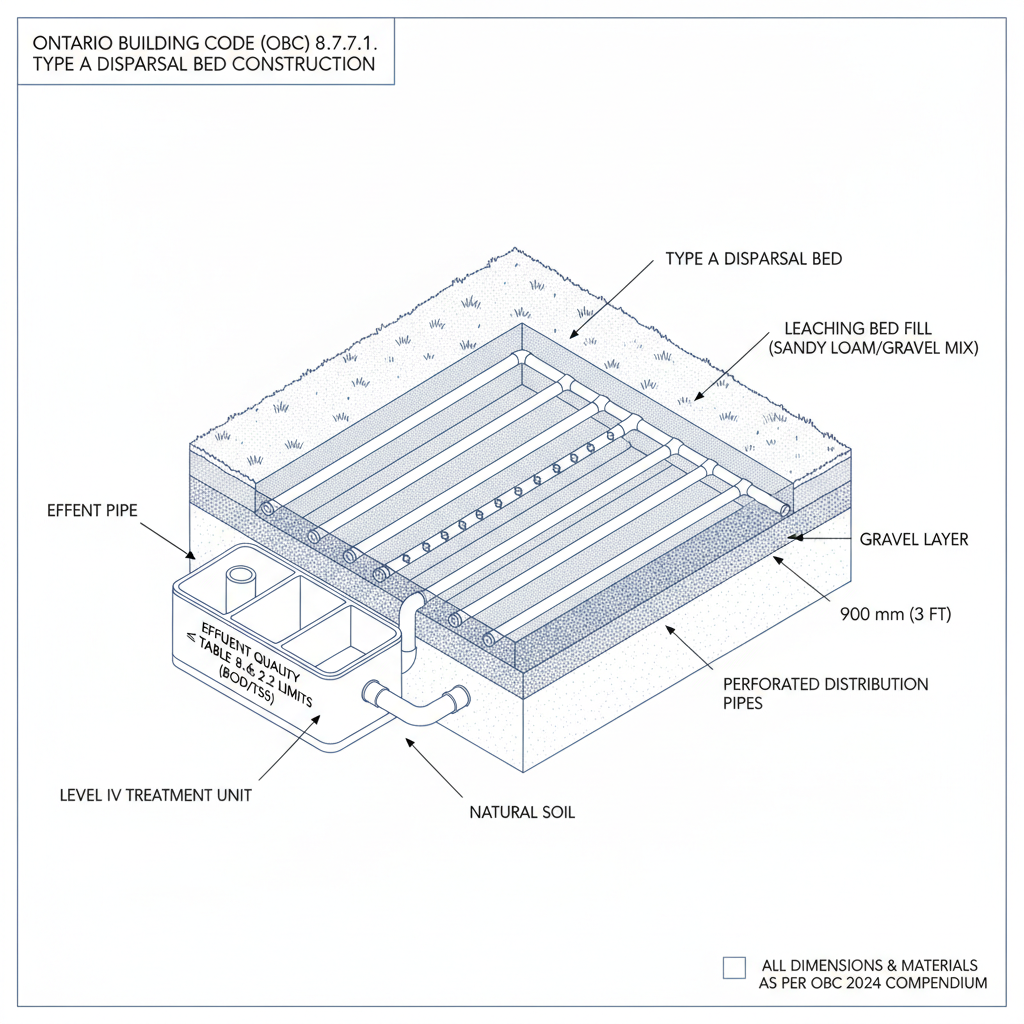
When planning a high-performance septic system, empcontracting.ca Inc. your construction contractor in London, Ontario, adheres strictly to the specifications outlined in the Ontario Building Code (OBC) 8.7.7.1. These requirements are essential for protecting local groundwater and ensuring the efficiency of Level IV treatment units.
Effluent Quality and Backfill Protocols
According to Sentence (1) and (2), any treatment unit paired with a Type A dispersal bed must meet the maximum concentration standards for Level IV effluent. To maintain structural integrity and proper drainage, the bed must be backfilled with specific leaching bed fill to prevent any post-construction depressions on the surface.
Layer Thickness and Sand Quality
The combined thickness of the sand and stone layers must be at least 500 mm. The sand layer itself requires a minimum thickness of 300 mm and must consist of sand with a percolation time (T-time) between 6 and 10 minutes, with no more than 5% fines. This precision ensures optimal filtration for properties across Ontario.
Area Calculations for Soil Contact
The OBC requires specific mathematical calculations to determine the contact area between the dispersal bed and the underlying soil. The formula A = QT/850 is standard, but if soil percolation exceeds 15 minutes, the sand layer must be extended (A = QT/400) to ensure proper horizontal effluent movement and absorption into the natural environment.
Disclaimer: This content is generated from the Ontario Building Code for educational purposes. Always consult with a licensed professional engineer or your local building department before starting any construction project in London, Ontario.