Ontario Building Code 2024: Occupancy Classifications and Fire Safety Guide | empcontracting.ca Inc.
Sarah's Expert Insight
OBC Compliance Specialist
"Correctly applying the '10% rule' for ancillary spaces is a game-changer for mixed-use developments in London and Oakville, as it can significantly reduce the costs associated with fire separations and structural fireproofing. As senior consultant at empcontracting.ca Inc. your construction contractor in London, Ontario, I emphasize that early classification of Group F occupancies is vital, especially in Muskoka’s industrial workshops, to avoid unexpected compliance hurdles during the final inspection phase."
Navigating the 2024 Ontario Building Code (OBC) is essential for any successful commercial or residential development. As your trusted partner, empcontracting.ca Inc. your construction contractor in London, Ontario, provides expert guidance on Part 9 requirements for fire safety and occupancy classifications.
Fire Safety Systems and Installation Standards
Standpipes and Fire Pumps
Under OBC 9.10.1.3, standpipe and hose systems must be designed and installed in strict conformance with Articles 3.2.5.8. to 3.2.5.11. Additionally, fire pumps must meet the rigorous standards of Articles 3.2.5.17. and 3.2.5.18. These systems are the first line of defense in protecting multi-storey structures and high-occupancy buildings.
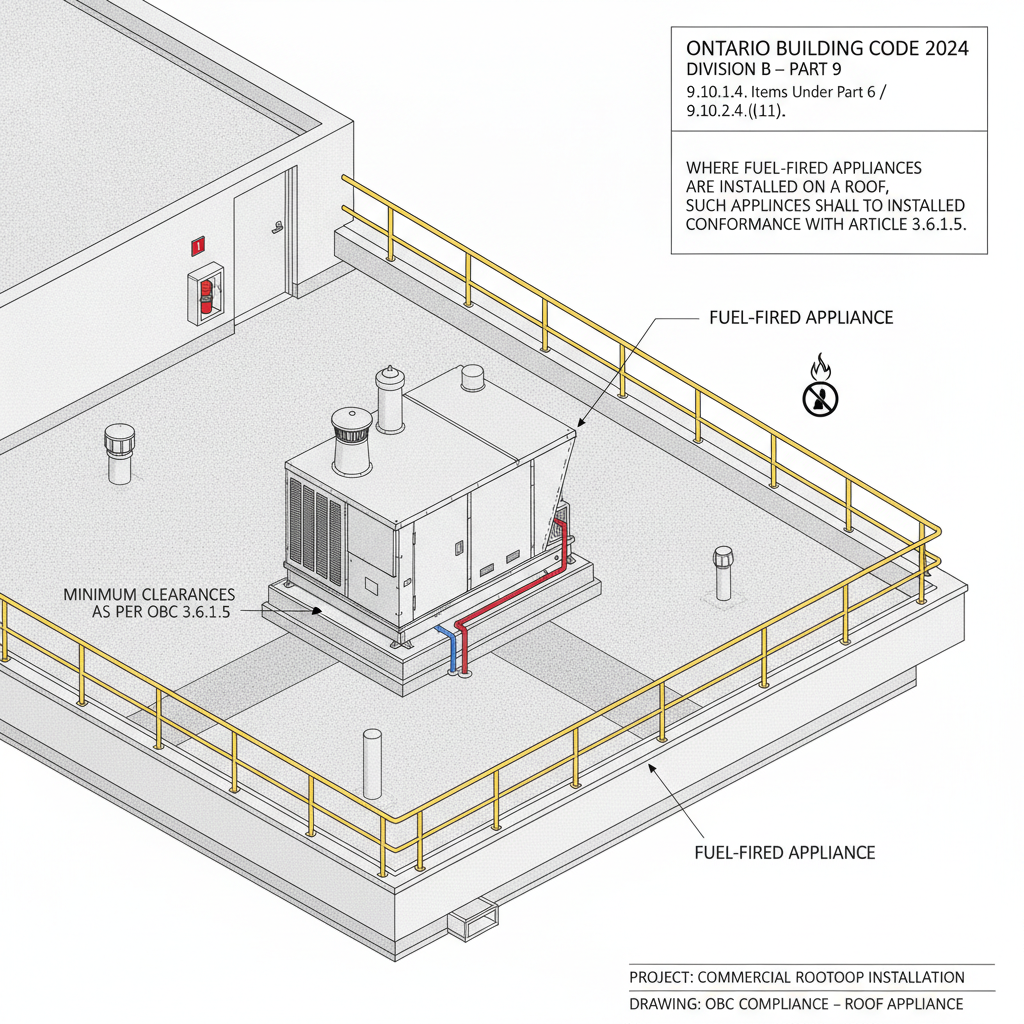
Roof-Mounted Appliances
When fuel-fired appliances are installed on a roof, they fall under Article 3.6.1.5., ensuring that heating and power systems do not compromise the building's fire integrity.
Commercial Kitchen Requirements
In accordance with OBC 9.10.1.4, kitchens containing commercial cooking equipment that produce grease-laden vapours must be designed under the jurisdiction of Part 6 (Article 6.3.1.6). This ensures specialized ventilation and fire suppression systems are in place to prevent high-hazard kitchen fires.
Understanding Major Occupancy Classifications
Table 9.10.2.1. Occupancy Groups
Every building or portion thereof must be classified into one of the following major occupancy groups to determine construction requirements:
- Group C: Residential occupancies.
- Group D: Business and personal services occupancies.
- Group E: Mercantile occupancies (Retail).
- Group F, Division 2: Medium-hazard industrial.
- Group F, Division 3: Low-hazard industrial (excluding residential storage garages).
Buildings with Multiple Occupancies
The 10% Rule for Mixed-Use Structures
According to Article 9.10.2.4., in buildings containing more than one major occupancy, smaller areas (ancillary spaces) may not need to be considered a separate major occupancy if they do not exceed 10% of the floor area of the storey. This exemption does not apply to Group F, Division 2 industrial occupancies, which always require strict classification. For complex mixed-use builds, empcontracting.ca Inc. your construction contractor in London, Ontario, ensures your project meets these nuanced fire separation standards.
Disclaimer: This content is generated from the Ontario Building Code for educational purposes. Always consult with a licensed professional engineer or your local building department before starting any construction project in London, Ontario.