Ontario Building Code 2024: Guide to Used Materials and Code Structure for London Projects
Sarah's Expert Insight
OBC Compliance Specialist
"As a senior consultant at empcontracting.ca Inc., I find that clients in London and Muskoka are increasingly interested in using reclaimed materials for their unique aesthetic and environmental benefits. However, under OBC 1.2.2.3, it is critical to verify that these materials—especially structural timber or older appliances—undergo rigorous testing to ensure they match the performance of modern equivalents before installation."
Navigating the complexities of the 2024 Ontario Building Code (OBC) is vital for any successful build or renovation. At empcontracting.ca Inc. your construction contractor in London, Ontario, we specialize in interpreting these regulations to ensure your project is both compliant and high-quality.
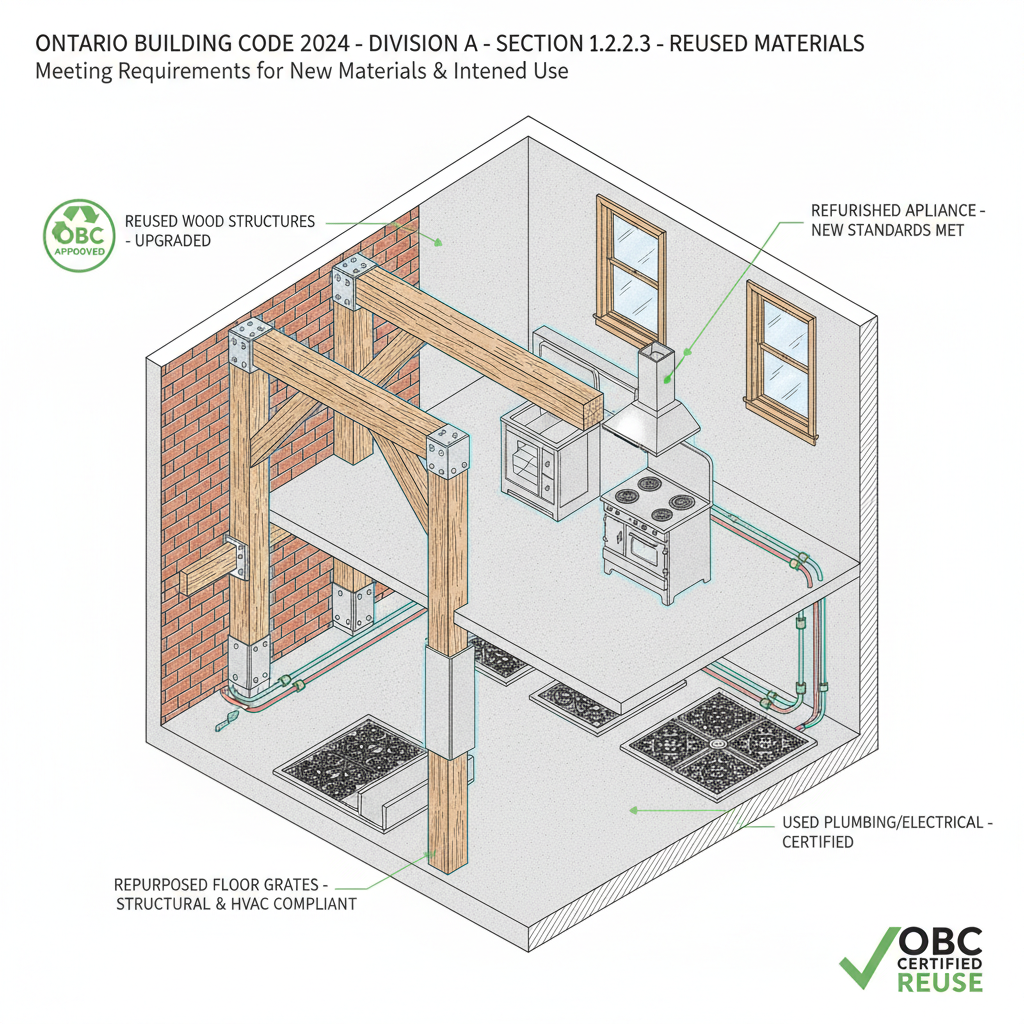
OBC 1.2.2.3: Utilizing Used and Recycled Materials
Sustainability and cost-effectiveness are key drivers in modern construction. According to Section 1.2.2.3, the use of recycled and used materials, appliances, and equipment is permitted in Ontario construction projects, provided they meet specific criteria.
Compliance Standards for Reused Equipment
To incorporate used materials legally, they must meet the current code requirements for new materials and be deemed satisfactory for their intended use. This ensures that even when choosing eco-friendly or reclaimed options, the structural integrity and safety of the building are never compromised.
Understanding the Divisions of the Ontario Building Code
The OBC is organized into three distinct divisions, each serving a unique purpose in the regulatory framework. Understanding these is essential for any developer or homeowner in London, Oakville, or Muskoka.
Division A: Compliance, Objectives, and Functional Statements
Division A defines the scope of the code and outlines the high-level objectives and functional statements that all buildings must satisfy. It sets the foundation for why certain rules exist.
Division B: Acceptable Solutions
This is the technical heart of the OBC. Division B provides the specific solutions and technical standards—such as Part 7 (Plumbing) and Part 12 (Resource Conservation)—that must be followed to achieve compliance.
Division C: Administrative Provisions
Division C governs the administrative side of construction, including the processes for permits, inspections, and the professional qualifications required for those involved in the building process.
Specialized Applications: Farm Buildings
Part 2 of Division B specifically applies to farm buildings, highlighting that different occupancy types require tailored technical solutions to meet safety standards.
Disclaimer: This content is generated from the Ontario Building Code for educational purposes. Always consult with a licensed professional engineer or your local building department before starting any construction project in London, Ontario.