2024 Ontario Building Code Guide: Fire Separation Closures and Door Requirements
Sarah's Expert Insight
OBC Compliance Specialist
"In the London and Oakville markets, we often see compliance issues with door swing directions in service rooms and the specific thickness of steel frames for wired glass. At empcontracting.ca Inc. your construction contractor in London, Ontario, we prioritize these 2024 OBC details during the framing phase to avoid costly retrofit requirements during final occupancy inspections."
Understanding the nuances of the 2024 Ontario Building Code (OBC) is essential for ensuring safety and compliance in any commercial or residential build. As empcontracting.ca Inc. your construction contractor in London, Ontario, we specialize in implementing these complex safety standards to protect your investment.
OBC 9.10.13: Closures in Fire Separations
Fire separations are only as effective as their openings. The following sections outline the rigorous standards for glass, frames, and hardware used in fire-rated assemblies.
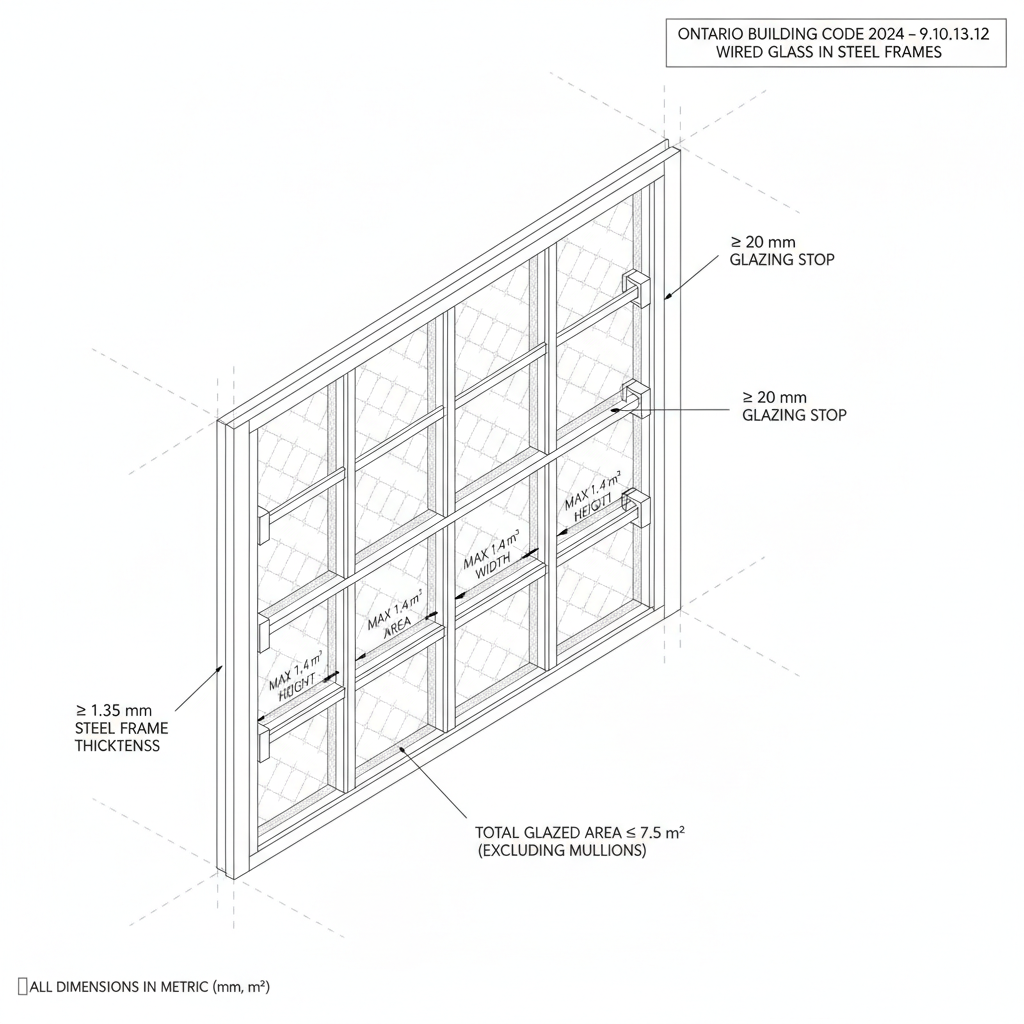
9.10.13.6. & 9.10.13.7. Steel Frames and Glass Block
Wired glass must be mounted in fixed steel frames with a minimum metal thickness of 1.35 mm and a 20 mm glazing stop. Individual panes are limited to 0.8 m² in area. Additionally, steel door frames must conform to CAN/ULC-S105 standards to ensure performance during a fire event. Glass blocks may be used as closures for fire separations requiring a rating of up to 1 hour, provided they meet Article 9.10.3.1. requirements.
9.10.13.8. Maximum Size of Openings
The OBC limits the size of openings in interior fire separations to maintain structural integrity:
- Non-Sprinklered: Max area of 11 m² with no dimension exceeding 3.7 m.
- Sprinklered: Max area of 22 m² with no dimension exceeding 6 m.
9.10.13.9. to 9.10.13.11. Door Hardware and Latches
Every swing-type door in a fire separation requires a functional latch and, generally, a self-closing device. Exceptions for self-closers exist for certain business occupancies, except in hotels or dead-end corridors. Hold-open devices are permitted only if installed according to Article 3.1.8.14., ensuring they release during an alarm.
9.10.13.12. Service Room Door Swing
For service rooms containing fuel-fired equipment, doors must swing into the room if they lead to public corridors or assembly rooms. In all other scenarios, these doors must swing outward to facilitate safe egress and operational safety.
Disclaimer: This content is generated from the Ontario Building Code for educational purposes. Always consult with a licensed professional engineer or your local building department before starting any construction project in London, Ontario.