2024 Ontario Building Code Guide: Renovating Existing Buildings in London, Ontario
Sarah's Expert Insight
OBC Compliance Specialist
"Navigating Part 11 is critical for heritage retrofits in London or Muskoka cottage expansions, as it permits tailored compliance for structures over five years old. As empcontracting.ca Inc. your construction contractor in London, Ontario, we ensure these building size and fire separation rules are strategically applied to maximize your project's safety and budget."
Navigating OBC Part 10 and Part 11 for Existing Structures
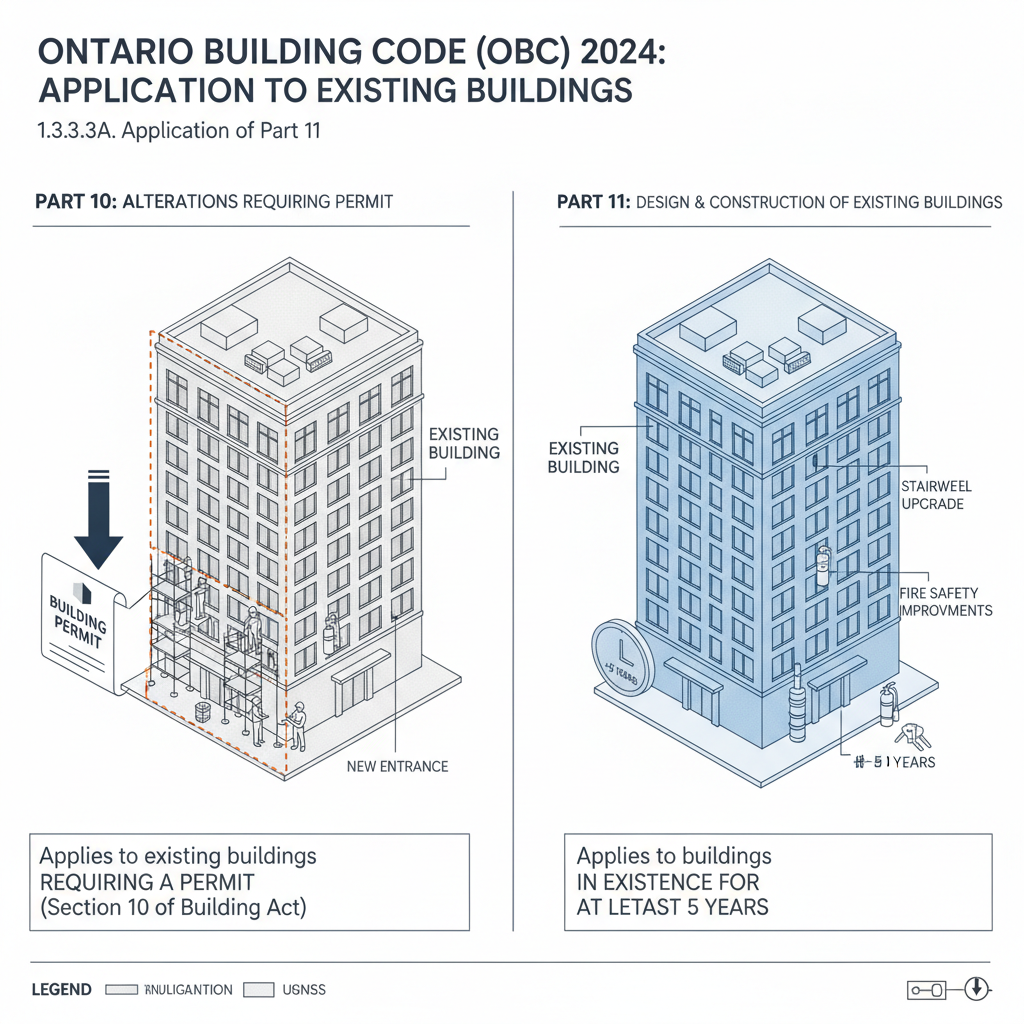
When planning a renovation or change of use in Ontario, understanding how the Building Code applies to existing structures is critical. Under the 2024 Building Code Compendium, Part 11 of Division B is specifically designed for buildings that have been in existence for at least five years. This allows for specialized considerations during design and construction that differ from entirely new builds.
The Five-Year Rule for Additions and Alterations
If you are working with empcontracting.ca Inc. your construction contractor in London, Ontario, we ensure compliance with Sentence 1.3.3.3B. This section dictates that if a building is over five years old, Part 11 applies to the entire structure, even if it contains a newer addition. This is vital for maintaining structural and fire safety integrity during modern upgrades.
Material Alterations and Building Relocation
For existing buildings subject to material alteration or repair, the Code generally applies only to the specific parts being renovated. However, if a previously occupied building is moved or reconstituted at a new site, the Code focuses specifically on the changes necessitated by the move itself. This provides a clear framework for heritage projects or modular relocations in areas like Oakville and Muskoka.
Building Size Determination and Fire Safety
Correctly determining building size is essential for fire safety compliance. The Code specifies that:
- Firewalls: Portions of a building divided by a firewall are often considered separate buildings, impacting fire alarm requirements and plumbing systems.
- Fire Separations: In residential buildings (excluding retirement homes) up to 3 storeys high, vertical fire separations with a 1-hour resistance rating allow portions to be treated as separate buildings, provided firefighter access is within 45 meters.
Designated Structures Requiring Permits
Not all regulated structures are "buildings" in the traditional sense. The OBC designates specific structures that require strict adherence to the Code, including:
Retaining Walls and Pedestrian Bridges
- Retaining walls exceeding 1,000 mm in exposed height that are adjacent to public property or building access points.
- Pedestrian bridges attached to buildings.
- Crane runways and other industrial support structures.
Disclaimer: This content is generated from the Ontario Building Code for educational purposes. Always consult with a licensed professional engineer or your local building department before starting any construction project in London, Ontario.