2024 Ontario Building Code: Residential Smoke Alarm and Life Safety System Requirements
Sarah's Expert Insight
OBC Compliance Specialist
"The 2024 OBC updates for integrated testing and 175 cd visual signaling are game-changers for secondary suite conversions in London and high-end residential builds in Oakville or Muskoka. As empcontracting.ca Inc. your construction contractor in London, Ontario, we emphasize that these stricter smoke alarm placements—particularly inside every sleeping room—are now non-negotiable for passing municipal inspections and ensuring occupant safety."
Navigating the complexities of the 2024 Ontario Building Code (OBC) is essential for ensuring the safety and legal compliance of your residential project. At empcontracting.ca Inc. your construction contractor in London, Ontario, we specialize in implementing these technical requirements to protect your investment and your family.
Commissioning Integrated Life Safety Systems
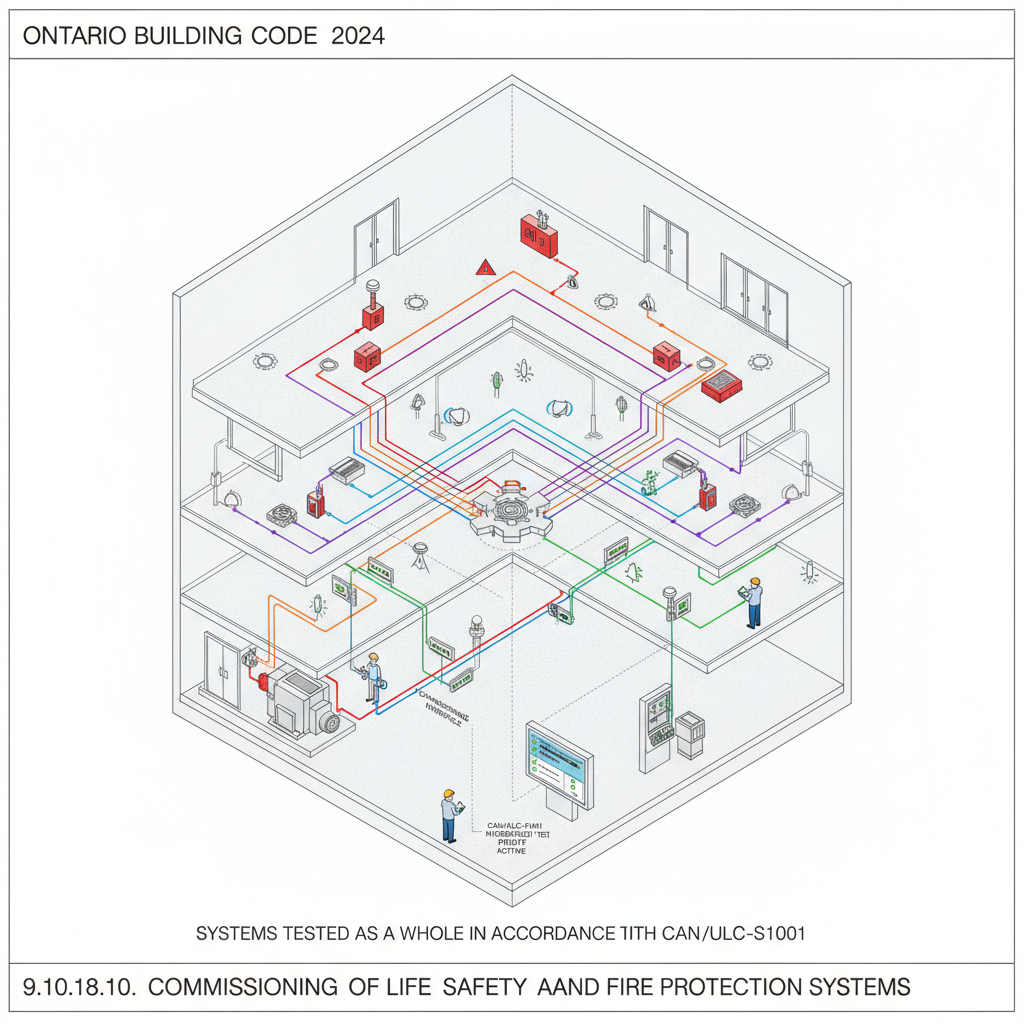
According to OBC 9.10.18.10., when fire protection and life safety systems are integrated, they must be tested as a single functional unit. This commissioning must follow the CAN/ULC-S1001 standard, 'Integrated Systems Testing of Fire Protection and Life Safety Systems.' This ensures that if one system is triggered, all interconnected safety components respond correctly. This requirement typically applies to complex residential structures but excludes standard single-family homes where no dwelling unit is located above another.
Comprehensive Smoke Alarm Requirements (OBC 9.10.19)
The 2024 code maintains strict standards for smoke alarms to ensure early detection and maximum audibility. Under Article 9.10.19.1., smoke alarms conforming to CAN/ULC-S531 must be installed in every dwelling unit, every sleeping room, and all common spaces within houses containing secondary suites.
Visual Signaling and Accessibility
Modern compliance now requires smoke alarms to include a visual signaling component that meets NFPA 72 standards. In sleeping rooms, these visual signals must have a minimum luminous intensity of 175 cd. While these signals do not necessarily require battery backup or synchronized flash rates in individual dwelling units, their presence is a mandatory safety feature for new constructions and major renovations.
Strategic Location and Installation
Placement is critical for compliance. Per OBC 9.10.19.3., alarms must be installed:
- On every storey, including basements.
- Inside every sleeping room.
- In hallways serving sleeping rooms, acting as a bridge between the bedroom and the rest of the home.
- In shared egress points or common areas within houses containing secondary suites.
Sound Patterns and Standards
To ensure occupants are alerted quickly, smoke alarms must produce specific temporal patterns or a combination of temporal patterns and voice relays. All installations must conform to the CAN/ULC-S553 standard, ensuring the devices are mounted correctly on or near the ceiling for optimal smoke detection.
Disclaimer: This content is generated from the Ontario Building Code for educational purposes. Always consult with a licensed professional engineer or your local building department before starting any construction project in London, Ontario.