OBC 2024 Dampproofing and Waterproofing Standards for London, Ontario Construction
Sarah's Expert Insight
OBC Compliance Specialist
"In areas like London and Oakville where high water tables and heavy clay soils are common, simply meeting the minimum dampproofing standards isn't enough; we often recommend advanced waterproofing to combat hydrostatic pressure. As the team at empcontracting.ca Inc. your construction contractor in London, Ontario, we ensure that every membrane—from EPDM to rigid polystyrene—is perfectly matched to the soil conditions and permeance requirements of the 2024 OBC to prevent future basement failures."
Navigating the complexities of the 2024 Ontario Building Code (OBC) is essential for any successful build. At empcontracting.ca Inc. your construction contractor in London, Ontario, we prioritize structural integrity and moisture management to ensure your project stands the test of time.
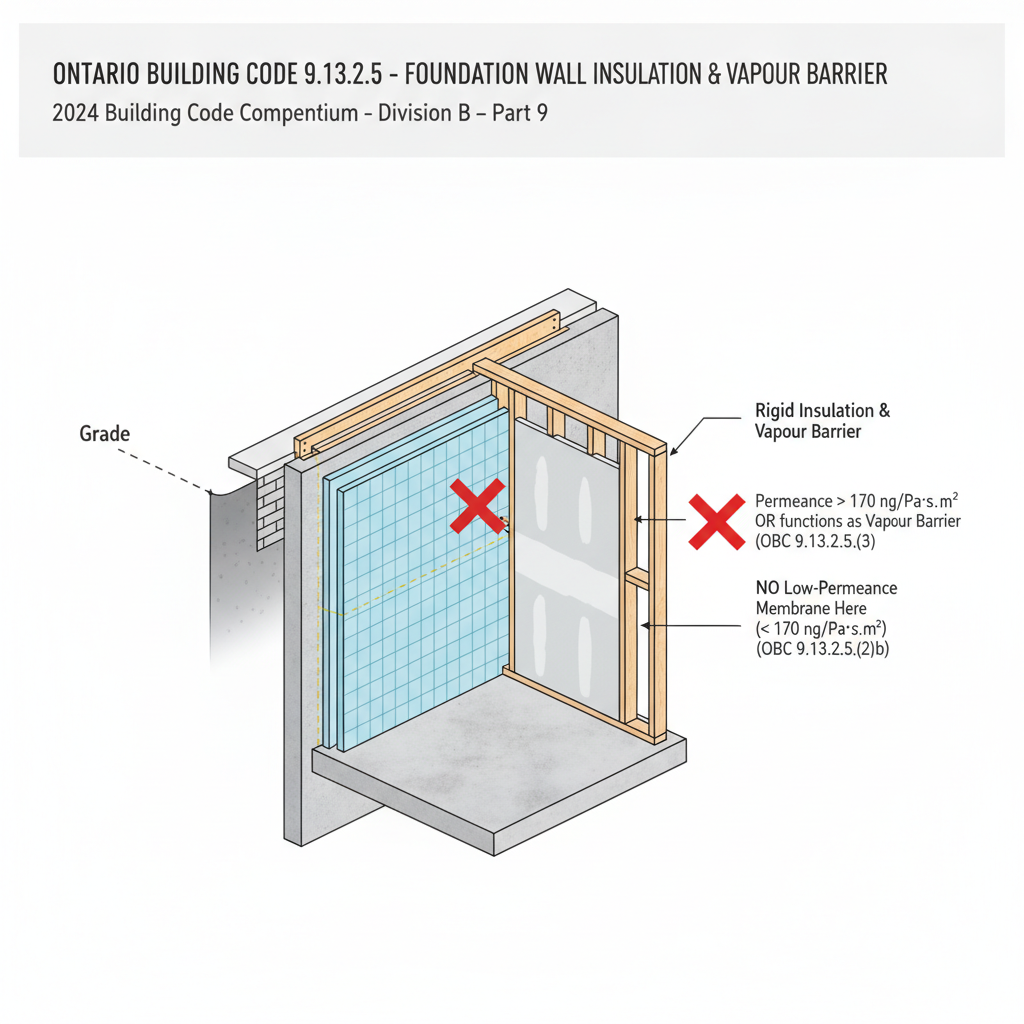
Section 9.13.2.5: Foundation Wall Moisture Protection
The code stipulates specific permeance requirements for interior foundation surfaces. Specifically, no membrane or coating with a permeance less than 170 ng/(Pa·s·m²) should be applied to the interior surface above ground level between the insulation and the foundation wall. When insulation acts as both moisture protection and a vapour barrier (per Subsection 9.25.4), it must cover the entire interior surface.
9.13.2.6. Dampproofing Requirements for Floors-on-Ground
Proper installation of dampproofing below or within floor assemblies is critical for preventing moisture migration into living spaces. Approved materials include:
Standard Dampproofing Materials
- Polyethylene film (minimum 0.15 mm thick) with 100 mm lapped joints.
- Type S roll roofing with 100 mm lapped joints.
- Rigid extruded or expanded polystyrene with shiplapped or sealed joints, provided it meets compressive strength and vapour permeance standards.
For installations between a floor-on-ground and a finished floor, the code permits thinner polyethylene (0.05 mm) or specific rigid polystyrene configurations.
9.13.3. Waterproofing Under Hydrostatic Pressure
Where hydrostatic pressure exists, simple dampproofing is insufficient; full waterproofing is required. This applies to assemblies separating interior spaces from the ground and the roofs of underground structures.
9.13.3.2. Selection of Waterproofing Materials
Materials used must be compatible with adjoining substrates and resistant to site-specific mechanisms of deterioration. Common compliant materials include:
- ASTM D1227 Emulsified Asphalt coatings.
- ASTM D3019 Lap Cement used with asphalt roll roofing.
- ASTM D4637 EPDM sheet membranes for single-ply applications.
Disclaimer: This content is generated from the Ontario Building Code for educational purposes. Always consult with a licensed professional engineer or your local building department before starting any construction project in London, Ontario.