Ontario Building Code 2024: Waterproofing Standards for Foundations in London and Southwestern Ontario
Sarah's Expert Insight
OBC Compliance Specialist
"In high-moisture regions like London and the rocky terrains of Muskoka, the transition between the footing and the wall is the most common failure point. At empcontracting.ca Inc., we emphasize Section 9.13.3.4(2) regarding continuity; ensuring the membrane is seamless across junctions is what separates a dry basement from a costly repair down the road."
Understanding OBC Section 9.13.3: Waterproofing Materials and Application
Proper foundation waterproofing is critical for any new build or renovation. As empcontracting.ca Inc. your construction contractor in London, Ontario, we ensure every project adheres strictly to the 2024 Building Code Compendium to prevent moisture ingress and structural decay.
9.13.3.2. Approved Waterproofing Materials
The OBC lists several approved standards for waterproofing membranes, ensuring durability across Ontario's diverse climates. These include:
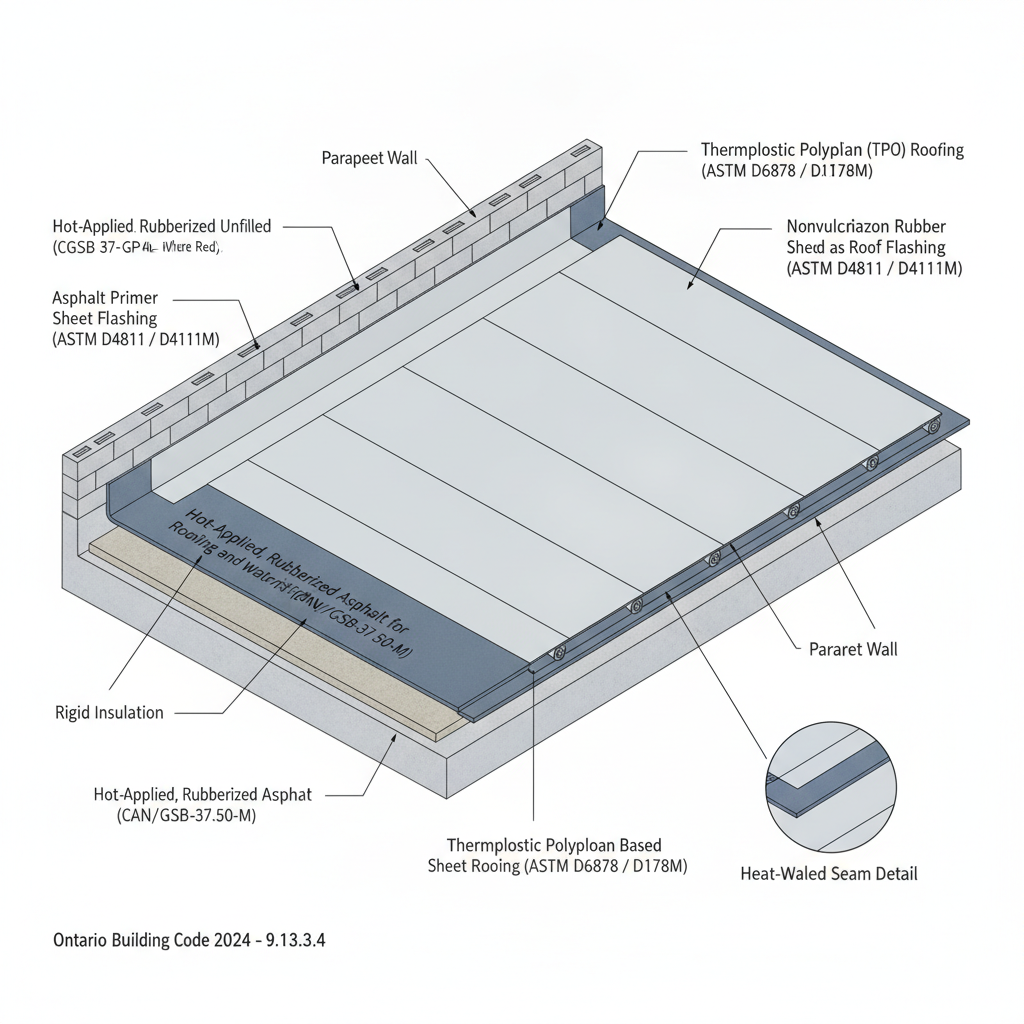
- ASTM D4811 / D4811M for nonvulcanized rubber sheet flashing.
- CAN/CGSB-37.54 for Polyvinyl Chloride (PVC) membranes.
- CAN/CSA-A123.4 for asphalt-based built-up systems.
- CSA A123.17 for glass felt waterproofing.
9.13.3.3. Preparation of Surface Requirements
Before application, surfaces must be meticulously prepared. Under Section 9.13.3.3, unit masonry walls must be parged with at least 6 mm of mortar below ground level. For projects utilizing Insulated Concrete Forms (ICF), the specific instructions of the ICF manufacturer must be followed to maintain material integrity. All surfaces must be free of ice, snow, frost, dust, and debris to ensure maximum adhesion.
9.13.3.4. Application of Waterproofing Membranes
Application must follow manufacturer specifications regarding priming, quantity, and curing times. Key requirements include:
- Continuity: Waterproofing must be continuous across joints and junctions between building elements.
- Water Management: The work area must remain dry during application and curing.
- Mechanical Protection: Waterproofed surfaces must be protected with suitable materials to prevent damage during the backfilling process.
Disclaimer: This content is generated from the Ontario Building Code for educational purposes. Always consult with a licensed professional engineer or your local building department before starting any construction project in London, Ontario.