Ontario Building Code Masonry Standards: Expert Guide by empcontracting.ca Inc. your construction contractor in London, Ontario
Sarah's Expert Insight
OBC Compliance Specialist
"Adhering to compressive strength and mortar standards is particularly vital in London and Muskoka, where extreme freeze-thaw cycles can quickly compromise substandard masonry. At empcontracting.ca Inc., your construction contractor in London, Ontario, we prioritize the selection of weather-resistant concrete units to prevent the spalling and moisture ingress that often plague non-compliant builds."
Understanding OBC Requirements for Masonry and Concrete Units
Compliance with the Ontario Building Code (OBC) is essential for ensuring the structural integrity and longevity of any building project. As empcontracting.ca Inc. your construction contractor in London, Ontario, we strictly adhere to these 2024 Compendium standards for masonry units and mortar applications.
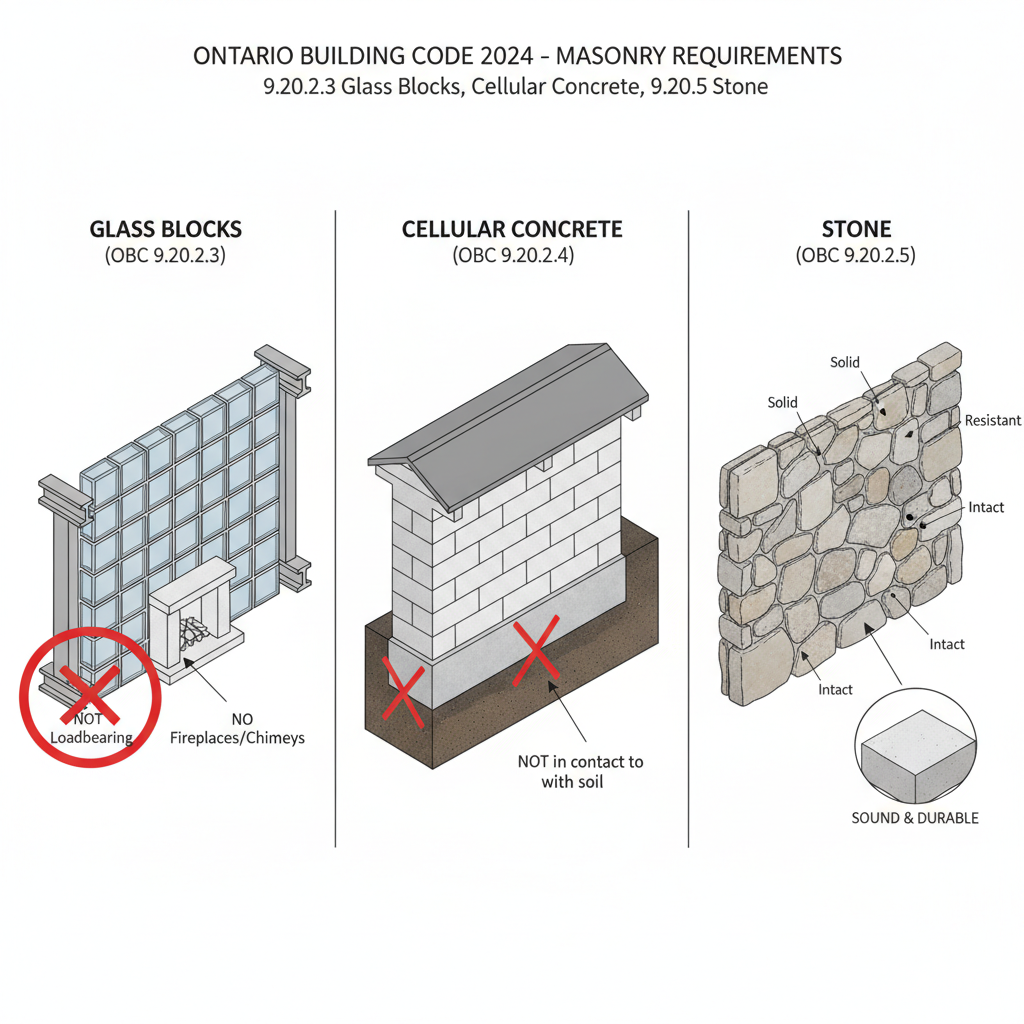
9.20.2.3. Glass Blocks and Cellular Concrete
Per the OBC, glass blocks must never be used as loadbearing units or within the construction of fireplaces and chimneys. Similarly, masonry made with cellular concrete is restricted from any contact with soil or exposure to outdoor weather conditions to prevent degradation.
9.20.2.5. Stone and Concrete Unit Durability
All stone utilized in construction must be sound and durable. Concrete blocks that are exposed to the weather must meet specific density and water absorption characteristics as defined by CSA A165.1 (Types A, B, C, or D) to ensure they can withstand the Ontario climate.
9.20.2.7. Compressive Strength Requirements
The compressive strength of concrete blocks is a vital safety metric. For solid or hollow concrete blocks exposed to weather, a minimum strength of 15 MPa is required, whereas 10 MPa is sufficient for protected units. Cellular blocks are strictly prohibited for weather-exposed loadbearing use.
9.20.3. Mortar and Grout Specifications
9.20.3.1. Quality of Mortar Materials
To ensure a strong bond, all cementitious materials and aggregates must comply with CAN/CSA-A179. Water and aggregates must be clean and free of deleterious materials. Furthermore, lime used in mortar must be hydrated, with specific slaking or soaking times required for lime putty to ensure proper chemical stability during the curing process.
Disclaimer: This content is generated from the Ontario Building Code for educational purposes. Always consult with a licensed professional engineer or your local building department before starting any construction project in London, Ontario.