Ontario Building Code 2024: Essential Guide to Masonry Corbelling and Flashing Standards
Sarah's Expert Insight
OBC Compliance Specialist
"In high-moisture regions like London, Oakville, and the Muskokas, failure to adhere to flashing and corbelling standards is a leading cause of premature building envelope failure. At empcontracting.ca Inc. your construction contractor in London, Ontario, we strictly follow the 2024 OBC thickness requirements for flashing to ensure that driving rain and freeze-thaw cycles don't compromise the structural longevity of your project."
Navigating the complexities of the 2024 Building Code Compendium is vital for structural integrity. As empcontracting.ca Inc. your construction contractor in London, Ontario, we specialize in implementing these high-level masonry standards to protect your investment.
Section 9.20.12: Corbelling Requirements
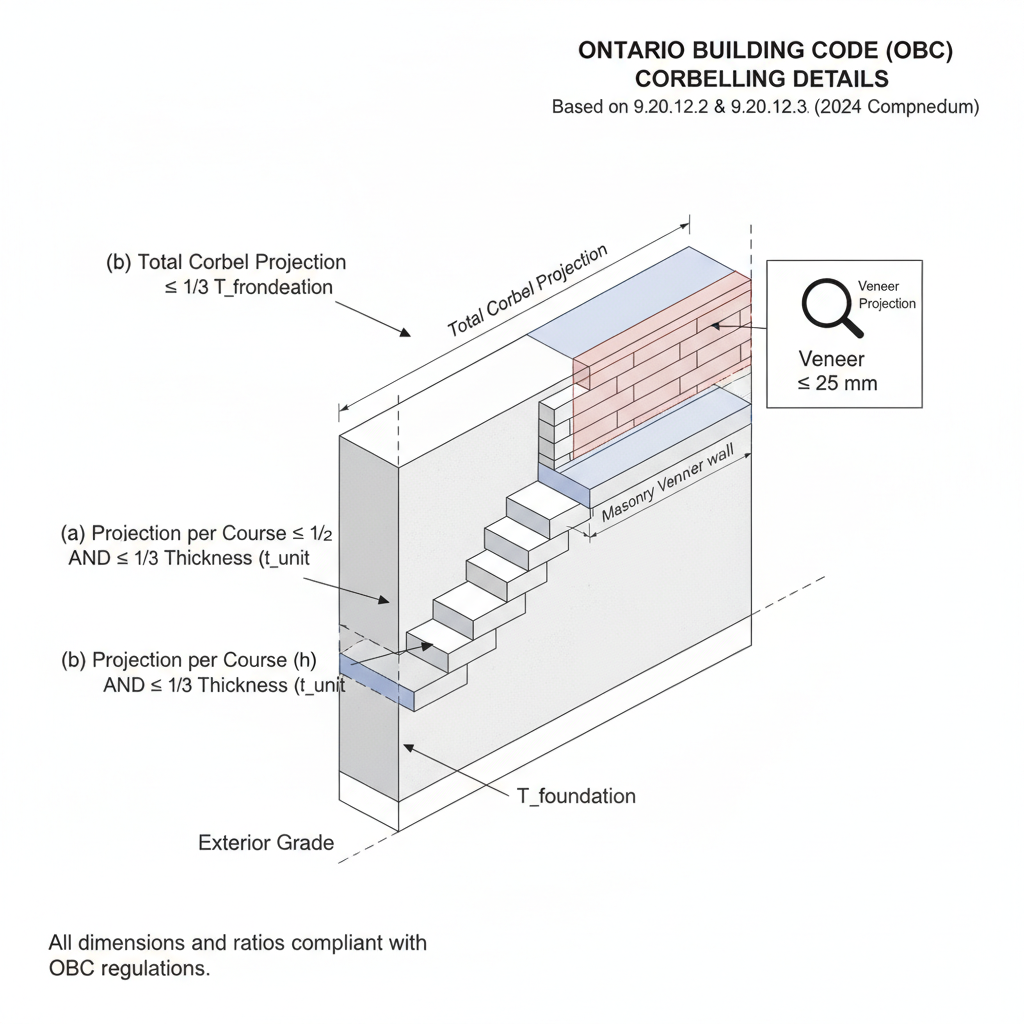
Corbelling involves stepping out masonry units to create a projection. The OBC 2024 sets strict limits to ensure structural stability is not compromised.
General Corbelling Limits
According to Section 9.20.12.2, the projection of each individual masonry course must not exceed half the height or one-third the thickness of the unit. Furthermore, the total cumulative corbel cannot exceed one-third of the foundation wall's total thickness.
Masonry Veneer Support (OBC 9.20.12.3)
Specific rules apply to masonry veneer resting on bearing supports. If the veneer is at least 90 mm thick, it may project up to 25 mm beyond the base. For thinner veneers (less than 90 mm), the limit is reduced to 12 mm. Rough stone veneer projections are limited to one-third of the bed width.
Section 9.20.13: Control of Rainwater Penetration
Proper flashing is the primary defense against water damage, rot, and mold in Ontario's harsh environment.
Approved Flashing Materials
Table 9.20.13.1 outlines the minimum thickness for flashing materials. Key requirements include:
- Copper: 0.46 mm for both exposed and concealed use.
- Galvanized Steel: 0.33 mm.
- Aluminum: 0.48 mm (Must be coated or separated from masonry/concrete to prevent corrosion).
- Polyethylene: 0.50 mm (Concealed only).
Installation and Critical Locations
Section 9.20.13.3 mandates flashing in specific vulnerable areas, including beneath window sills, over the heads of glass block panels, beneath weep holes, and over the heads of exterior windows or doors where eave overhangs provide insufficient protection. All fasteners must be corrosion-resistant and compatible with the flashing metal to prevent galvanic action.
Disclaimer: This content is generated from the Ontario Building Code for educational purposes. Always consult with a licensed professional engineer or your local building department before starting any construction project in London, Ontario.