2024 Ontario Building Code Guide: Carbon Monoxide Alarm Placement and Makeup Air Regulations
Sarah's Expert Insight
OBC Compliance Specialist
"At empcontracting.ca Inc. your construction contractor in London, Ontario, we emphasize that these CO alarm and makeup air requirements are vital for the modern airtight homes we build in London and Oakville. For our Muskoka clients with wood-burning stoves, ensuring correct depressurization and alarm placement is not just a code requirement—it's a critical safety measure against the 'back-drafting' of combustion gases."
Navigating the 2024 Ontario Building Code (OBC) is essential for ensuring residential safety and legal compliance. As the trusted experts at empcontracting.ca Inc. your construction contractor in London, Ontario, we specialize in implementing these critical life-safety standards in every project.
Section 9.32.3.8: Mechanical Ventilation and Makeup Air Requirements
Proper ventilation is more than just comfort; it is a matter of safety. The OBC outlines specific rules for makeup air systems to prevent dangerous depressurization within the home.
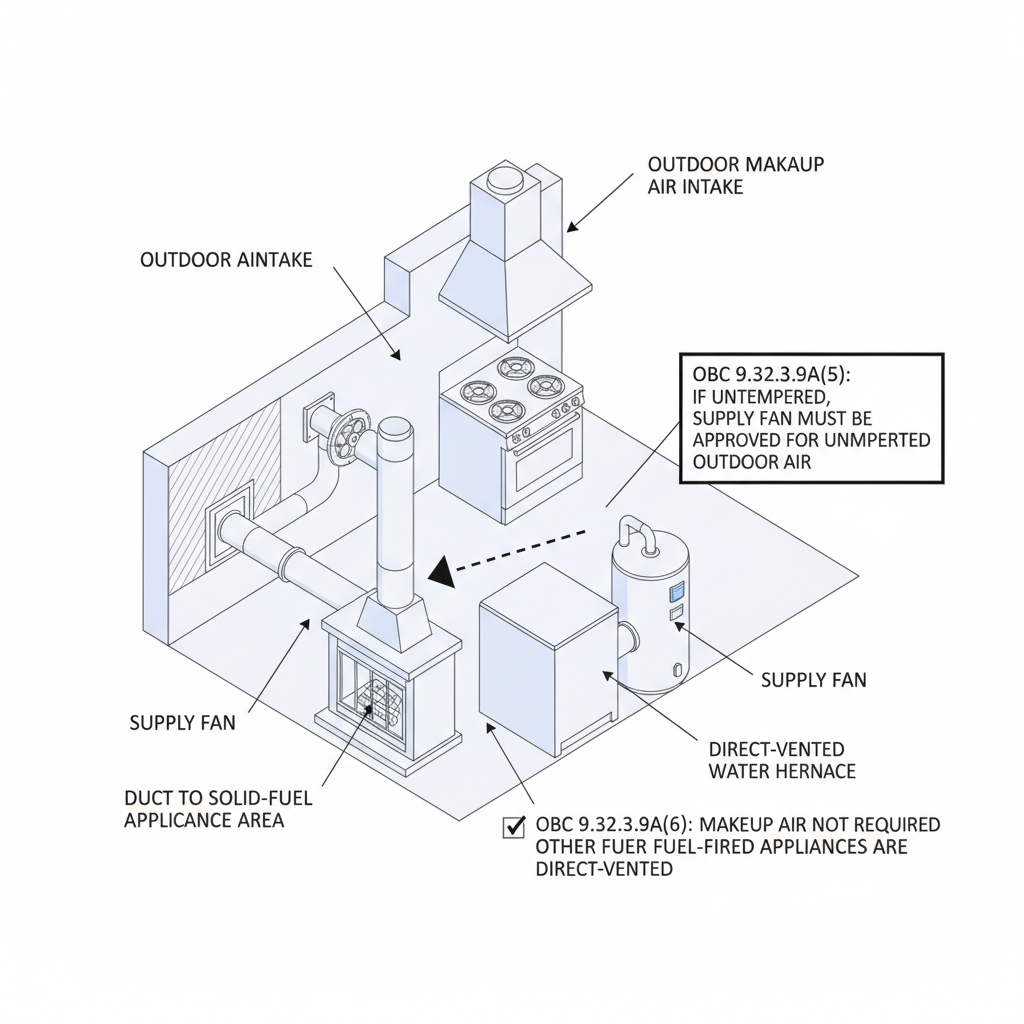
Makeup Air and Fan Approval
If outdoor makeup air is not tempered before reaching the supply fan, the fan must be specifically approved by the manufacturer for handling untempered air. This ensures equipment longevity and prevents mechanical failure in Ontario's harsh winters.
Exemptions to Makeup Air Rules
Makeup air provisions are not always mandatory. Exemptions include:
- Dwelling units with solid-fuel-burning appliances where all other appliances are direct-vented.
- Units that pass a CAN/CGSB-51.71 Depressurization Test.
- Mechanical exhausting devices used specifically for subfloor radon depressurization systems.
Section 9.32.3.9A: Carbon Monoxide (CO) Alarm Installation
Carbon monoxide is a silent threat, and the OBC is very specific about where detection must occur to protect residents.
Mandatory CO Alarm Locations
A carbon monoxide alarm is required in any residential suite that contains a fuel-burning appliance, a flue, or shares a wall/ceiling with a storage garage. Installation must occur in the following locations:
- Sleeping Areas: Adjacent to every sleeping room.
- Multi-Storey Suites: On every storey that does not contain a sleeping room.
- Combined Spaces: Within the main area of combined living and sleeping suites.
- High-Risk Rooms: Inside any sleeping room that contains a fuel-burning appliance or shares a partition with a garage or furnace room.
Public Corridors
In larger residential buildings, CO alarms must be installed in public corridors if the corridor is serviced by a forced-air fuel-burning appliance.
Disclaimer: This content is generated from the Ontario Building Code for educational purposes. Always consult with a licensed professional engineer or your local building department before starting any construction project in London, Ontario.